in the green
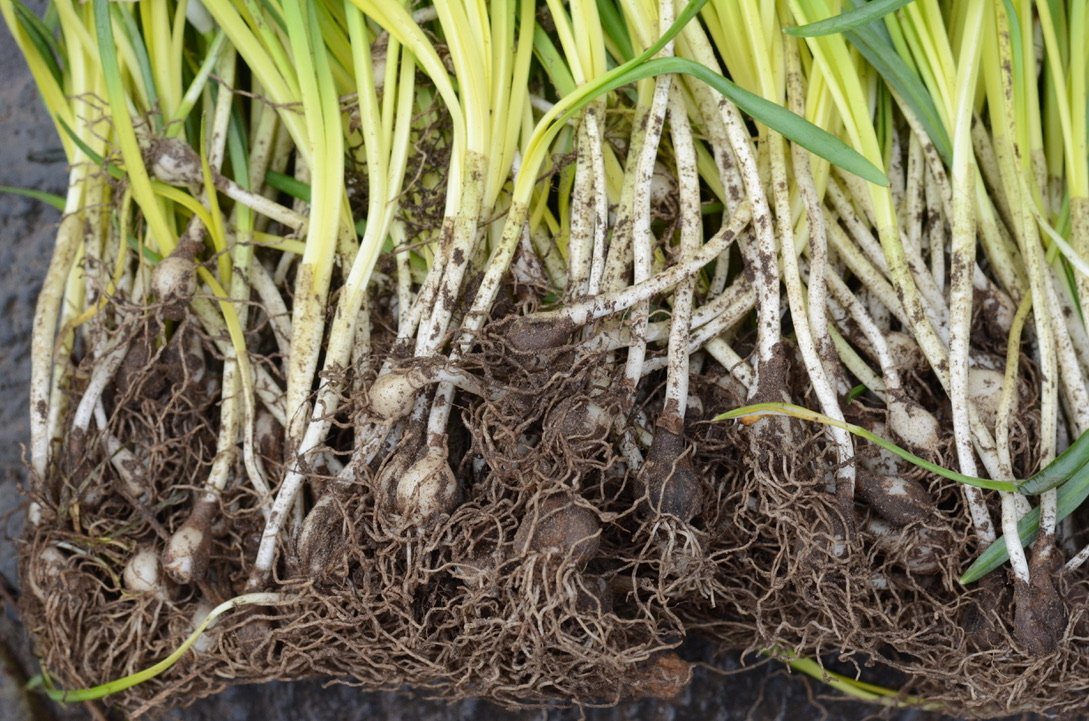
Today I found myself sitting outside at the table. The day felt settled and warm; the metal chairs, so often puddled with rain, were dry to the touch, an invitation to perch and contemplate the gardening day ahead. The daffodils planted in autumn are now piercing the ground with thickened spears of dark green, rounded at the tip and distinct among the more finely divided grass. An accustomed eye, tuned to this emergence, is needed before wading into the rougher reaches of the lawn, where bulbs lay with latent anticipation but now lie quickening with intent. It is satisfying to see them surface as winter loosens its hold, a small but certain stirring after months of stillness. I feel encouraged to tiptoe into the spaces that cusp the boundaries and beneath the canopies, settling newly delivered bulbs into their chosen places. I have yet to plant snowdrops in the green, having relied in the past on Autumn planting, handfuls of modest bulbs scattered into desired areas to naturalise the wilder fringes. This February I ordered one hundred Galanthus nivalis in the green, enough, I felt, to begin threading them into the growing tapestry of the garden. They arrived huddled together, roots bound, leaves strappy and already yellowing, flowers still enduring in ivory white, some dishevelled and exhausted after their flourish. My energy was directed toward establishing this white undercurrent.
A house not too far from me left a deeper imprint than I first expected. I have passed it before, but its verdant banks had never inspired me to pause. This February, however, they were swathed in informal drifts of Galanthus, luminous against the grass. I realised that if the garden sat in such display year round, I would likely grow familiar with it, perhaps even indifferent. But knowing this was February, that this moment was fleeting, I found myself suspended, absorbing the informality of those white drifts. I had discovered something that urged me toward annual attunement, a desire to deepen the seasonality here at Ty Gardd. I often think about lawns. Before I had a garden of my own, I associated them with childhood, simple spaces for uninterrupted play. Now I see them differently. As I layer the garden with season and surprise, I find myself asking what a lawn truly is, especially when bulbs are quietly pushing beneath it. Bulbs, particularly Galanthus, crocus, daffodils and anemone, are inherently naturalistic, they sit comfortably in wilder grass; both Galanthus and anemone settle easily in uninterrupted woodland spaces across the surrounding landscape. There is familiarity in that. Crocus, however, always carries an air of the exotic, I have yet to feel the urge to begin that chapter in earnest; for now I keep them in pots close to the house. Daffodils, by contrast, have driven this layering process since last autumn, inspired by the daintier, pendulous trumpets of the Cyclamineus and Triandrus groups, alongside our native Narcissus pseudonarcissus. I tread carefully, issuing quick, sharp “no’s” to the children when I see them travelling at full speed toward the bank of freshly emerging tips. What can you do.
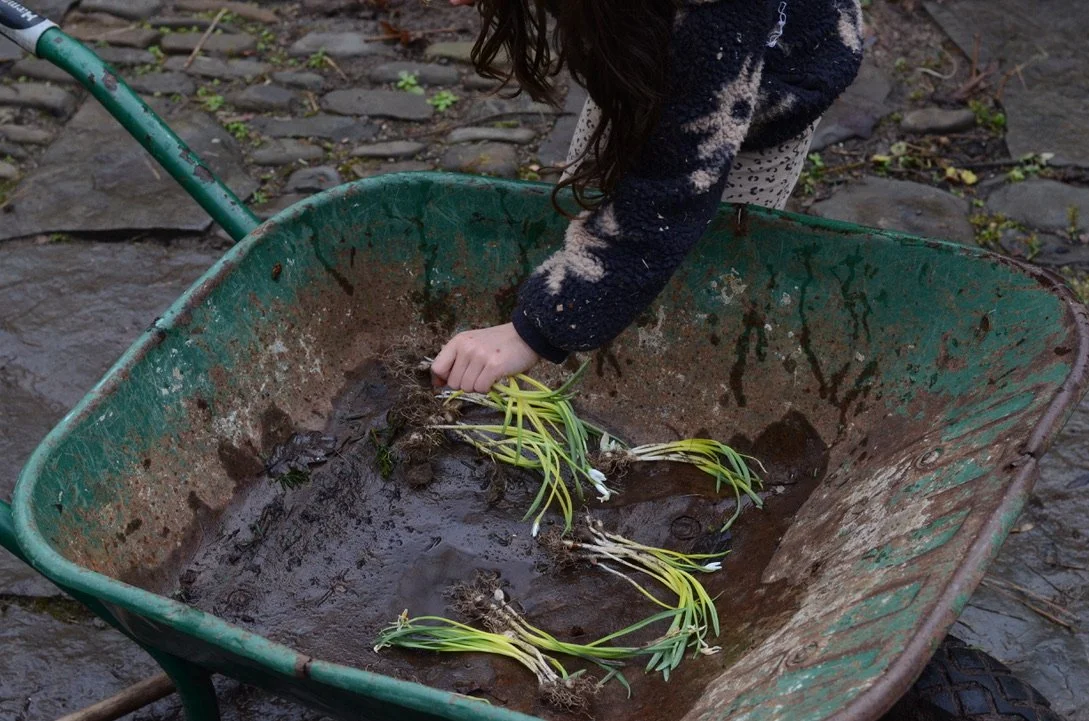
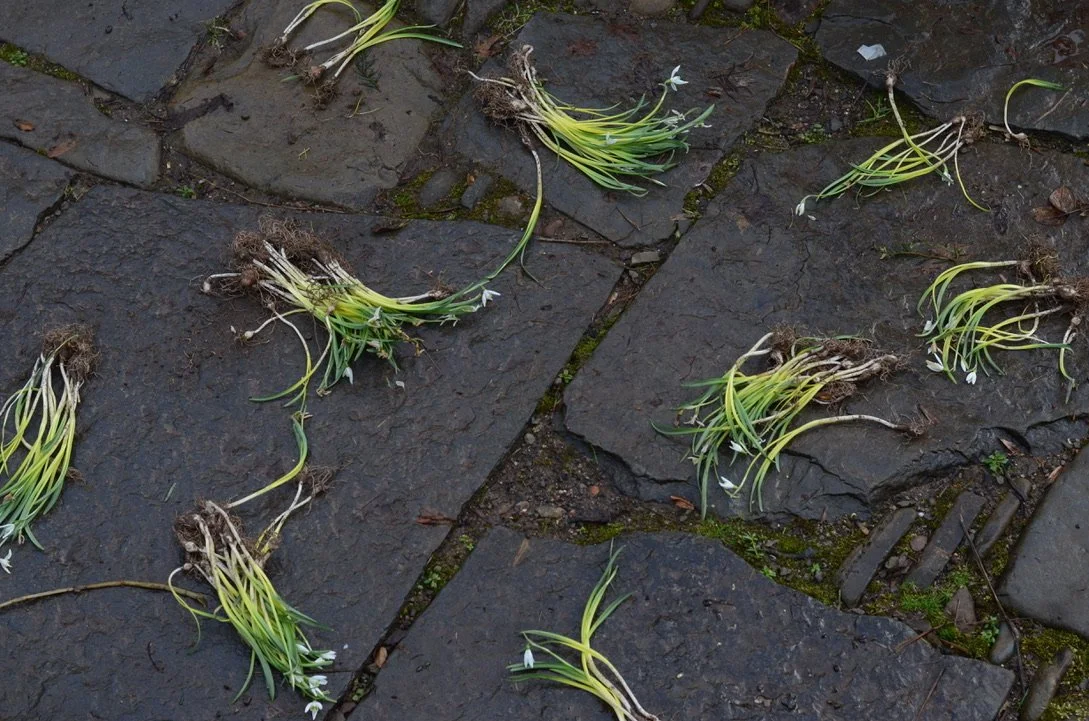
Sunday morning was spent with my two budding gardeners, excited by the prospect of digging holes and planting the splendid, strappy snowdrops. There is something deeply rewarding about young hands engaged in such ancient work, they notice nuances in the seemingly mundane, splitting congested clumps into smaller groupings ready to be offered up to their intended spaces. There is creativity in that gesture; Indigo used the paving to outline each clump with individual expression, more artful than I might have arranged myself.
This preliminary step allowed us to see the quantities before undertaking the planting; we spoke about making the approach more generous, allowing a larger proportion to nestle within the confines of the Taxus hedge and the stone walls that define its character. I always endeavour to mimic nature as closely as possible and the divided clumps were planted in loose groups, tucked beneath the shelter of hedges and tracing the contours of the walls. There is something instinctive about plants that cradle these structural elements, feathering articulated forms with a softening blur; it feels un-arranged, and therefore right, or simply the most sympathetic approach one can take to recall that initial moment paused outside the banks of the house that inspired me so deeply.
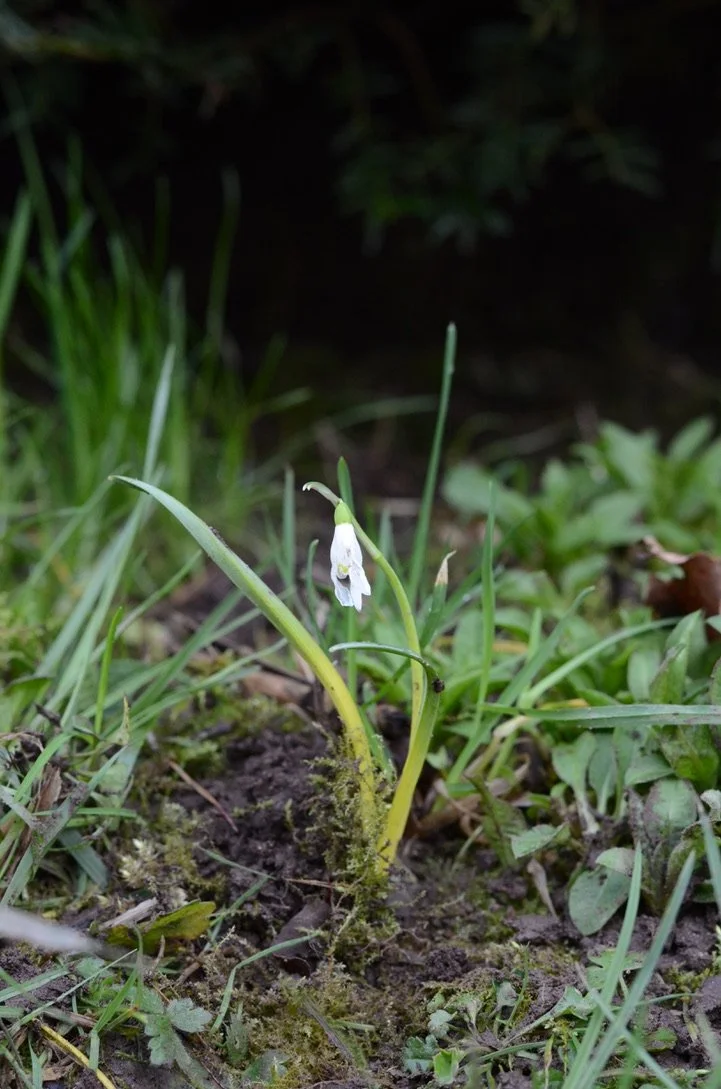
I don’t want to delve too deeply into the benefits of planting snowdrops in the green, but there are many. They arrive in flower with roots still intact, allowing them the best start; they establish quickly, flower reliably, and are far less likely to go ‘blind.’ The soil here at Ty Gardd is free-draining, so I know they will settle naturally, producing graceful, effortless drifts across the lawn come next spring.
Going forward, I will always allow for this combined motion: an autumn bulb layer along with planting in the green; an arrangement that will settle and evolve as I continue my hand in as natural a way as possible.